
Blog
Textile MOQ Explained: Why Minimums Differ by Product

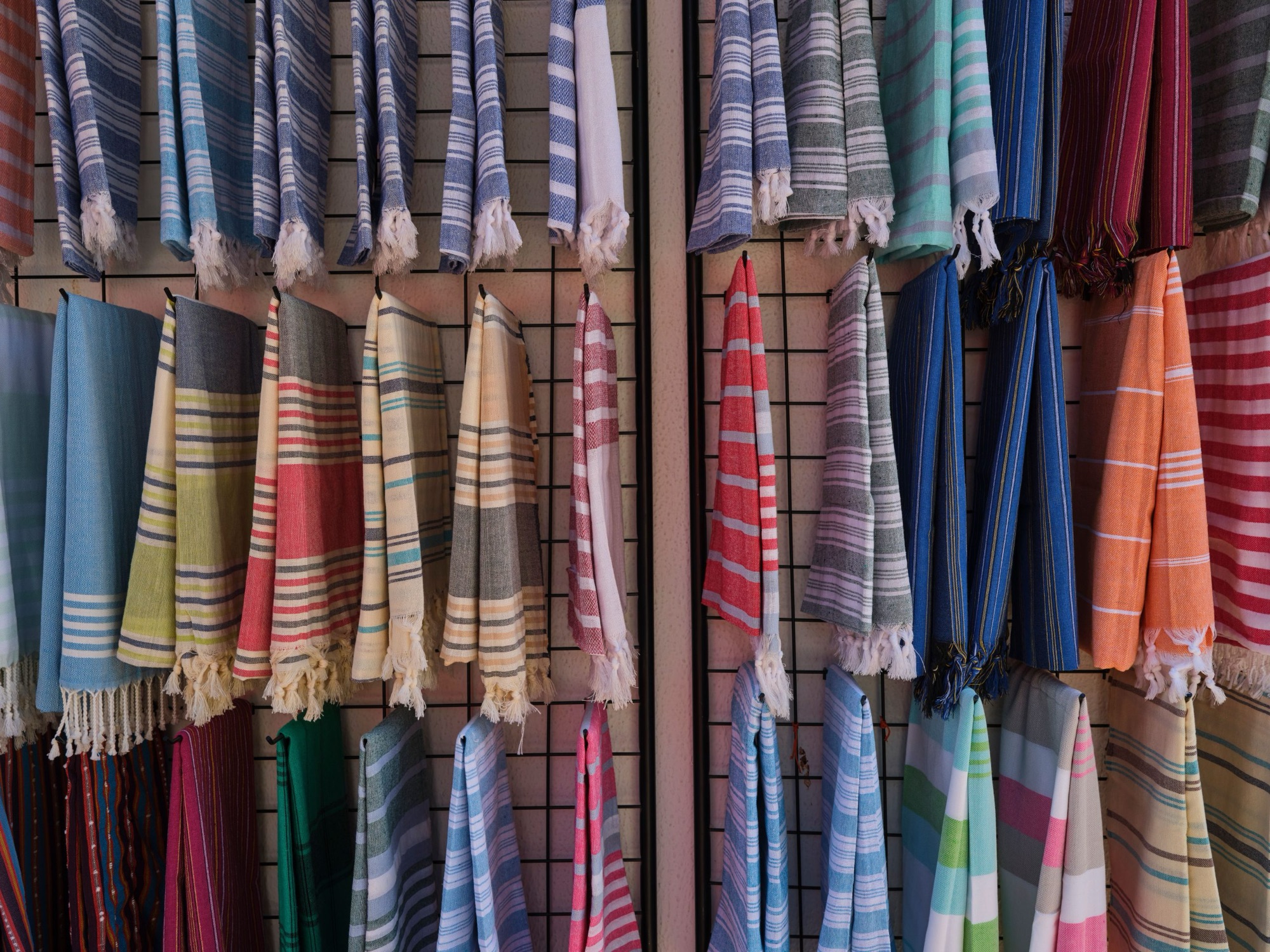
Every textile buyer meets the same question early: what is the minimum order? The honest answer is that there isn’t one number. Minimum order quantity (MOQ) changes from product to product, and often from colour to colour within the same product. Understanding why it changes is what lets you plan a launch properly instead of being surprised by it after you have chosen a design.
What MOQ Actually Is
MOQ is the smallest quantity a manufacturer can produce without the setup cost swallowing the order. It is not a sales tactic. Weaving, dyeing and finishing all have fixed preparation steps that cost the same whether you make fifty pieces or five thousand. The MOQ is simply the point where those fixed costs are spread thinly enough for the price to make sense for both sides.
Why the Number Changes From Product to Product
Four things drive it, and they stack:
- Weave type and loom setup. A plain flat-woven peshtemal and a jacquard towel are not the same job. A jacquard design has to be programmed and the loom dressed for that specific pattern; that setup is only worth doing above a certain run length. Plain weaves carry a lower threshold because the loom is already configured.
- Dye lot size. Dye houses run to a vessel size. A colour has to fill enough of that vessel to come out consistent — and consistency matters more than most buyers expect, because a second lot that is a shade off will not sit next to the first on a shelf or in a linen room. This is why MOQ is usually quoted per colour, not per order.
- Branding and finishing setup. Embroidery needs the artwork digitised and the machine set; a woven label needs its own small production run; jacquard-woven branding goes back to the loom programming. Each method has a different break-even point, which is why the same towel can carry different minimums depending on how you brand it.
- Yarn and composition. Standard cotton is held in stock. An organic, recycled or blended yarn may need to be ordered in, and that supply comes in its own minimum quantity.
How to Plan Around It
The practical move is to design your programme around the constraint rather than against it. Three things help:
- Fewer colours, more depth. Two colours ordered properly will almost always cost less per piece than five colours ordered thinly — and they will look more deliberate.
- Share a base across products. If your towels, robes and peshtemals sit in the same palette, you are consolidating dye lots instead of multiplying them.
- Separate the test from the rollout. Prove the design on the product with the lowest setup burden, then extend the palette or the construction once you know it sells.
Questions to Ask Before You Commit
- What is the minimum per colour, not just per order?
- Does the branding method I have chosen change the minimum?
- If I reorder in six months, will the specification and the shade be reproducible?
- Can I approve a physical sample before bulk production starts?
- What changes if I swap the yarn — organic, recycled, or a blend?
A supplier who answers these plainly is telling you something useful about how they work. A supplier who quotes a single number for everything is either simplifying or not being straight with you.
An Honest Word on Quality
A small minimum is not a quality signal in either direction — and neither is a large one. What matters is whether the manufacturer can hold a specification: the same GSM, the same shade, the same hem, run after run. Ask about reproducibility before you ask about minimums.
How We Handle It
We make to order in Denizli, and we confirm the minimum with the quotation rather than publishing one number that would be wrong for most of the range. It varies by product type, construction and colour — a flat-woven peshtemal and a jacquard beach towel genuinely are different jobs. You will know the figure, per product and per colour, before you commit to a design.
If you are planning a private label programme, this is worth settling early: it shapes how many colours you launch with and which products you lead on. Browse the peshtemal and bathrobe ranges to see the constructions involved, then request a quote with your product, colours and branding method — we will come back with the quantities that apply to your specification.